



Nejc Kutnar, Slovenia, 2026

Nominator: Mojca Perše
Nominator's statement
Nejc Kutnar is a designer defined by strong conceptual thinking, precision, and a deep understanding of the relationship between user, space, and function. Graduating in Interior Design with a GPA of 9.9, he has demonstrated exceptional dedication and maturity.
His work goes beyond aesthetics, addressing real-world challenges through research-driven and refined design solutions. He is a recipient of the SIT Furniture Design Award and the Rozman Award for best student of his generation.
Kutnar expanded his perspective through international and European collaborations, including the GIDE project in Valencia and the PUŠ programme, contributing to user-focused solutions in furniture and living environments.
His ability to merge concept with execution results in functional, sustainable, and engaging outcomes. Currently pursuing a Master’s in Design Management, he aims to elevate the role of design in business and society.
ALAE - MOBILE HOME
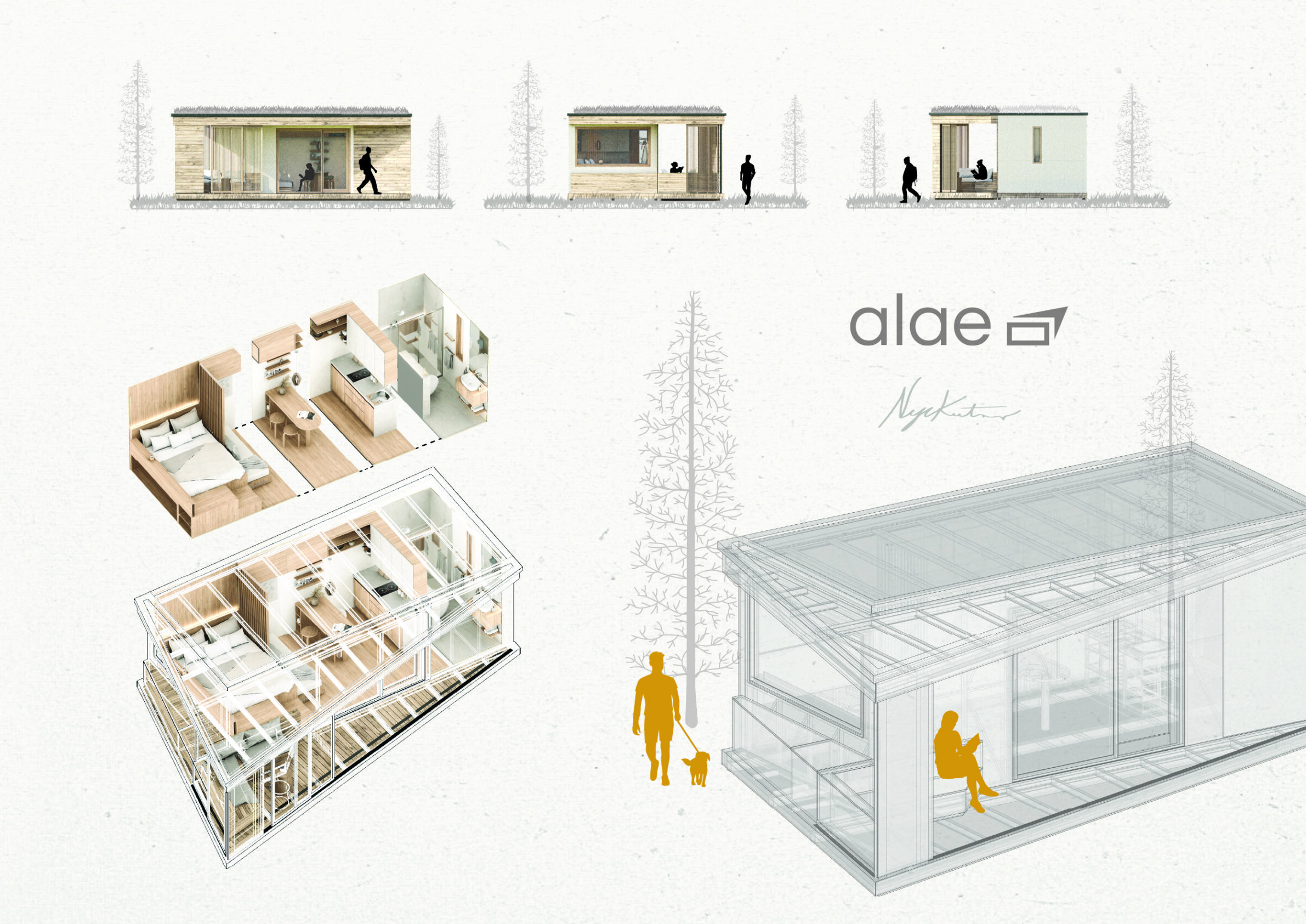
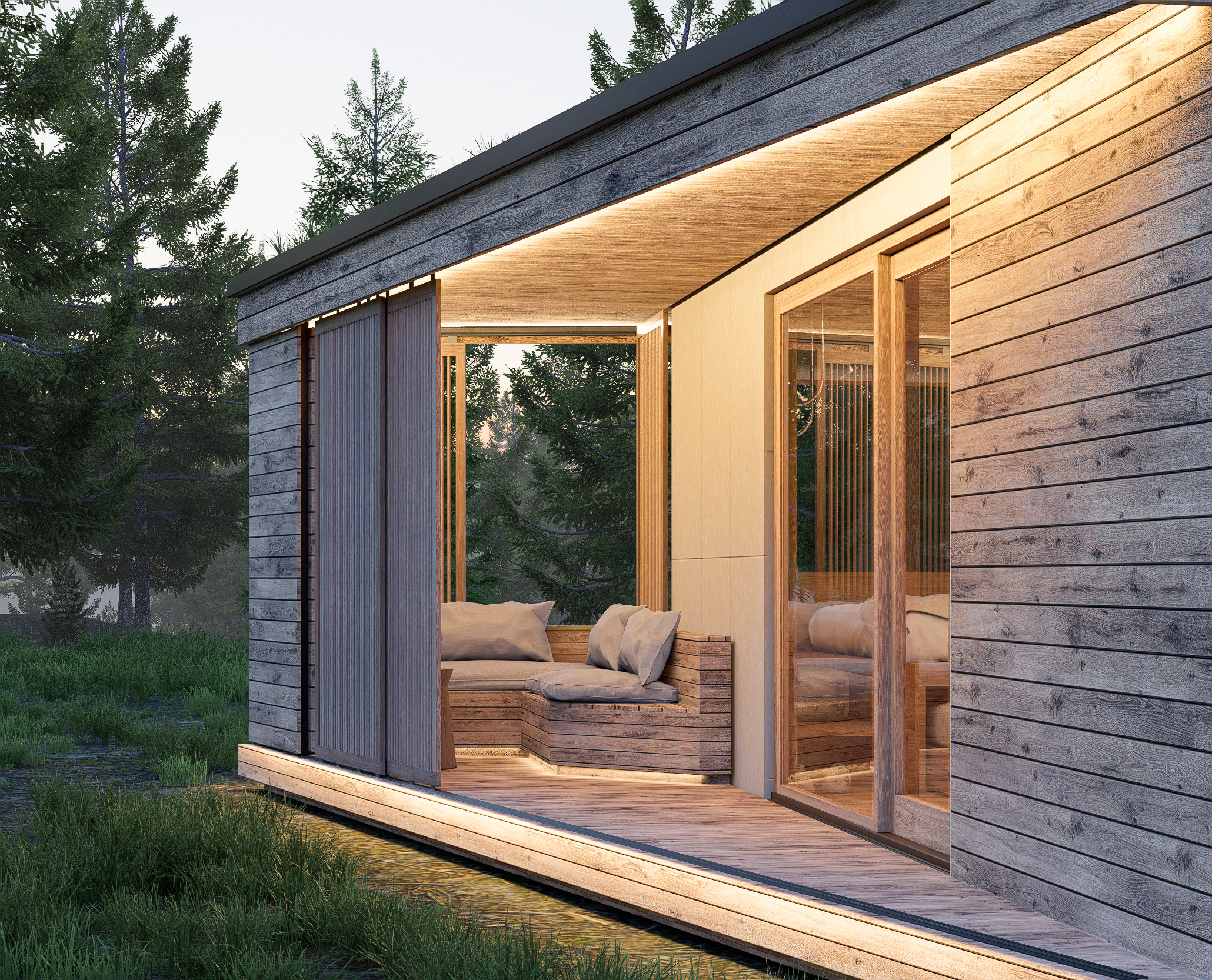
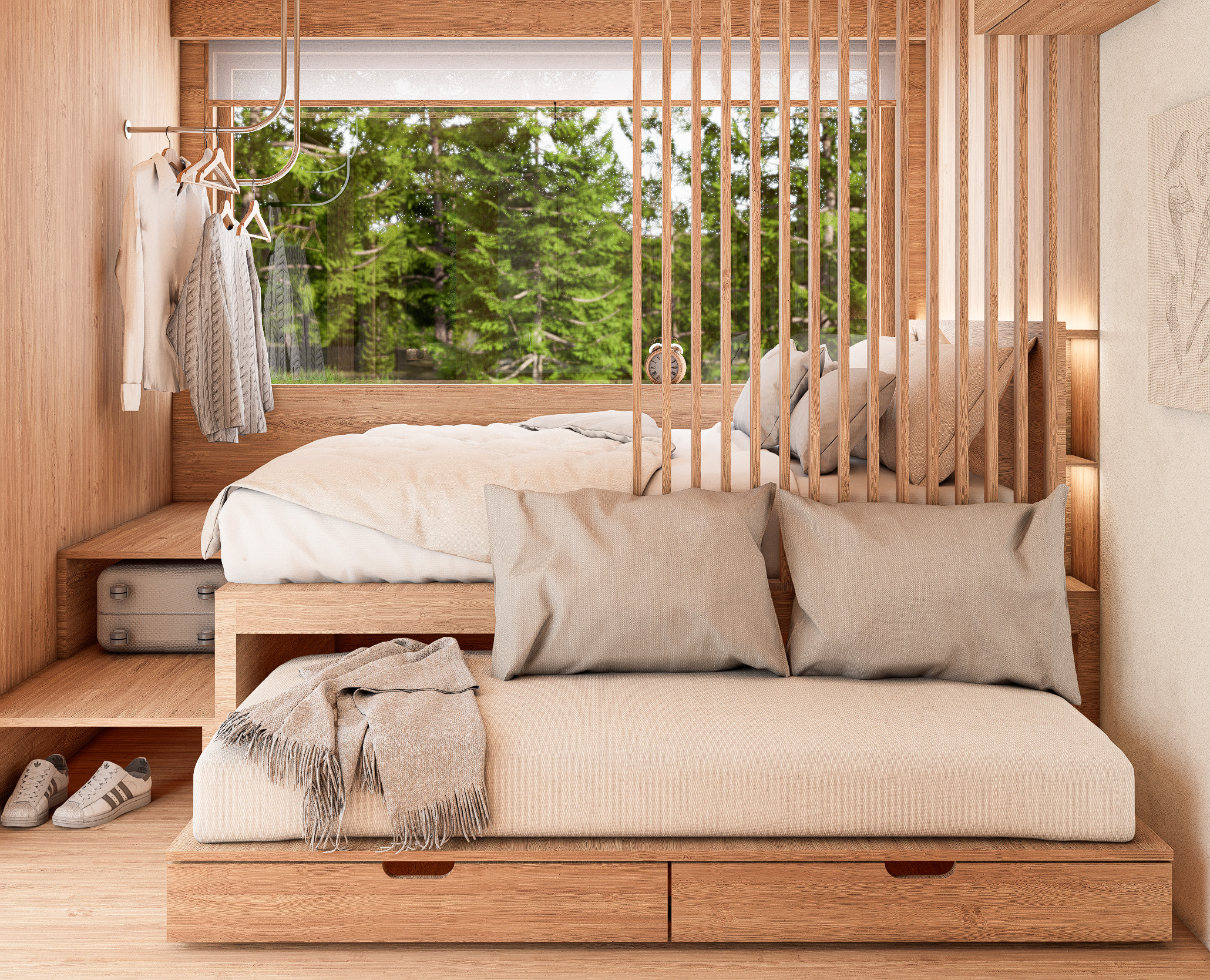
The mobile home Alae (Latin for “wing”) is conceived as an architectural tribute to nature. Its form draws inspiration from the image of a bird’s wing, which symbolizes freedom, movement, and lightness. The home transcends the static nature of a conventional homes and opens the possibility for a more liberated way of living - one that is not tied to a single place.
The canopy, with its dynamic and expressive form, introduces a sense of movement into the otherwise simple cubic architecture. It creates the impression that the mobile home is not permanently anchored in space, but rather ready to take flight. This form is not merely aesthetic; it plays a crucial role in the building’s energy efficiency.
The material concept is based on larch wood, used both in the interior and exterior, establishing a dialogue with the natural surroundings. As a renewable material, wood contributes to sustainability while giving the architecture a timeless quality.
Alae is not just a mobile home, but an architectural interpretation of freedom, mobility, and a deep connection with nature.
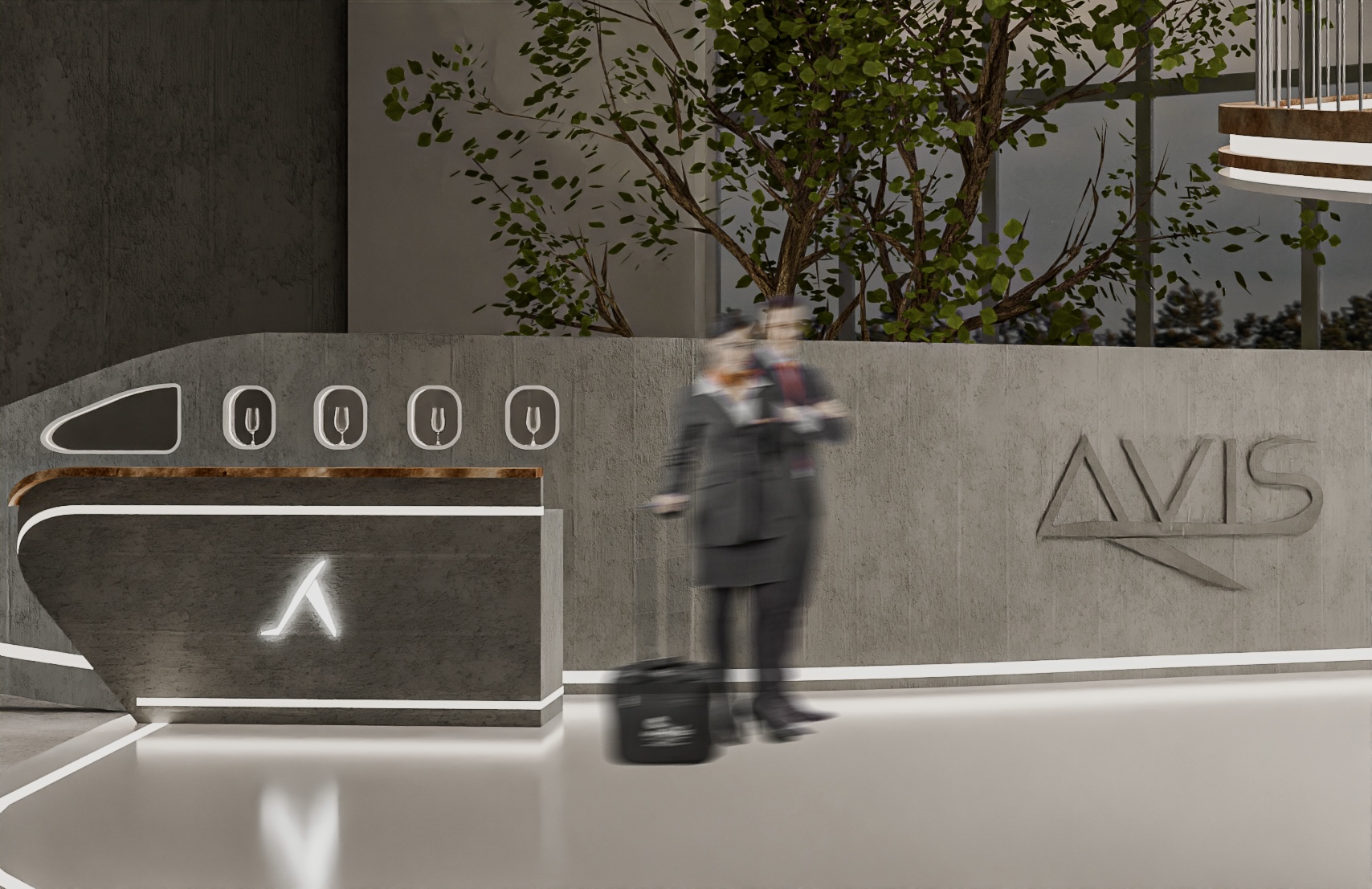
AVIS - AVIATION PAVILION
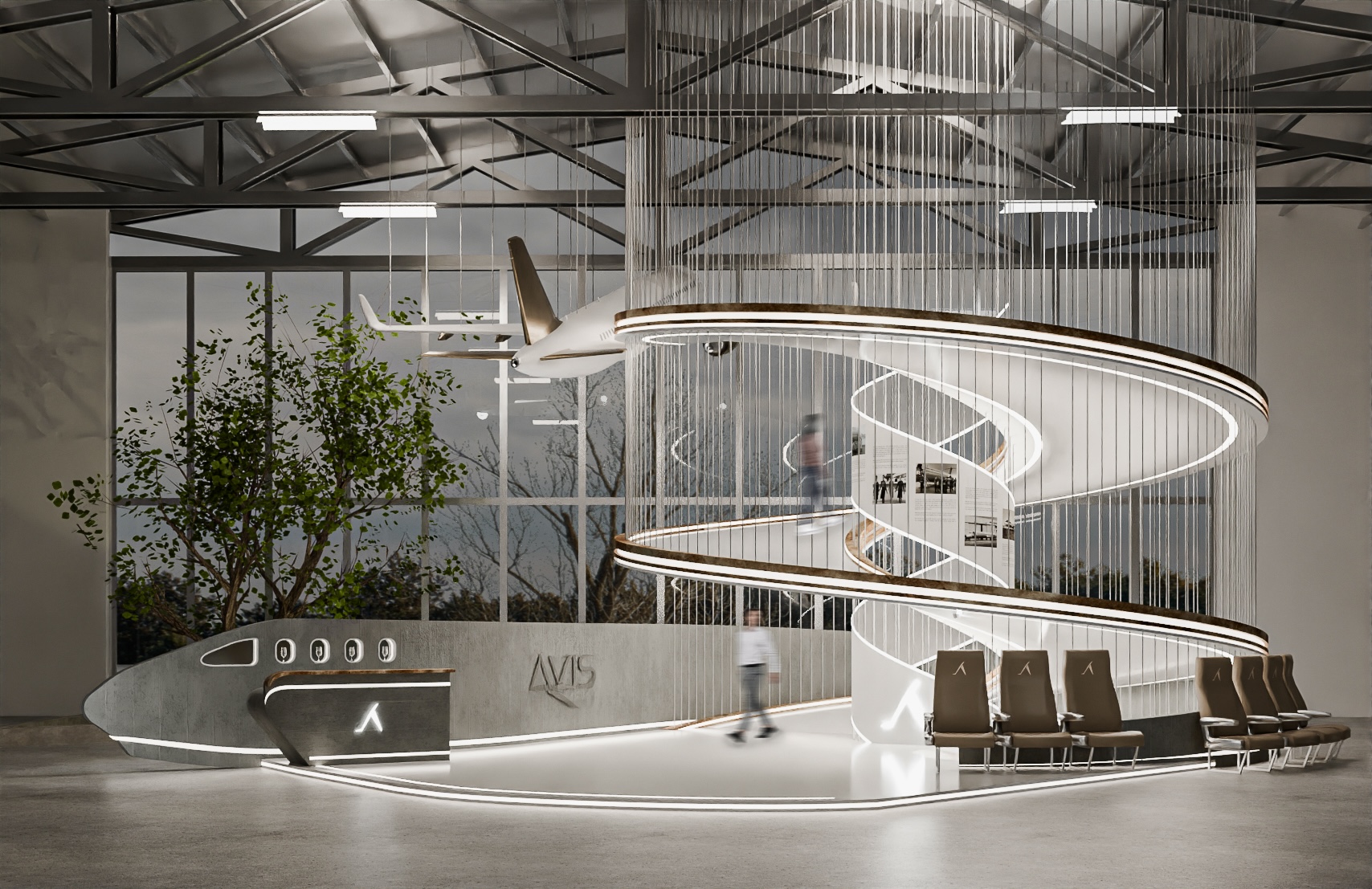
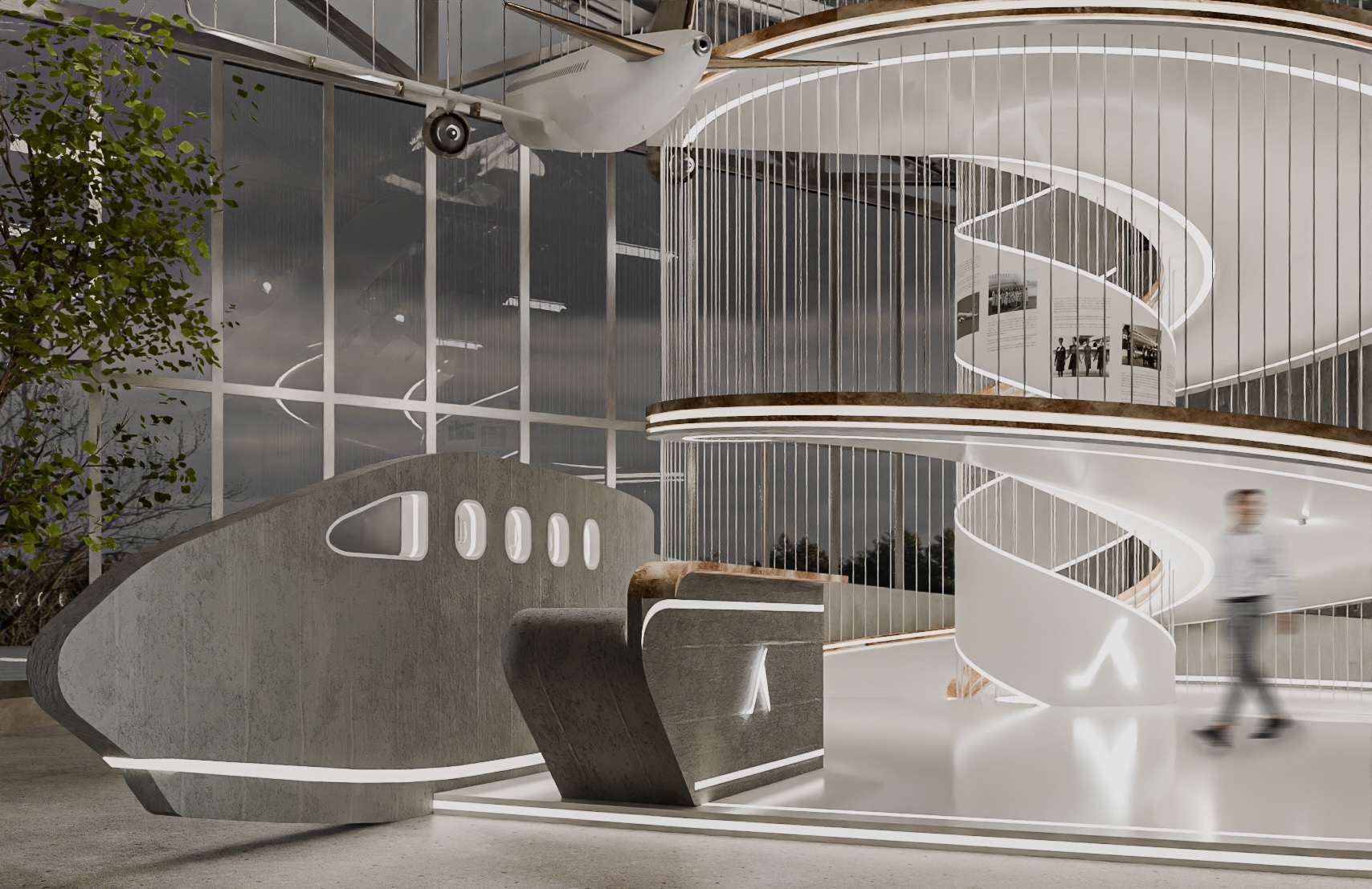
Avis (Latin for “bird”) is an aviation pavilion set within an abandoned hangar in Ljubljana, where the raw industrial shell becomes a backdrop for a spatial exploration of flight. The project unfolds as a narrative suspended between gravity and lift, drawing inspiration from the curved trajectories of aircraft and the ephemeral light trails they inscribe across the sky . Architecture here is not static, but conceived as a trace of movement - fluid, continuous, and in constant transition.
At its core, an ascending spiral walkway leads visitors through the pavilion, gradually lifting them into an embodied experience of takeoff. This spatial gesture transforms circulation into meaning, framing movement as a metaphor for progress, curiosity, and the human desire to transcend limits. Soft, aerodynamic lines dissolve rigid boundaries, allowing the structure to unfold as a seamless flow within the vastness of the hangar.
Light acts as an immaterial construction layer, articulating space through subtle gradients and linear traces that echo the luminous paths of aircraft in the night sky. The journey culminates within the wing of an aircraft model, where architecture and narrative converge into a suspended moment of motion - an illusion of speed and flight, poised between stillness and ascent.
BAUHAUS CABIN
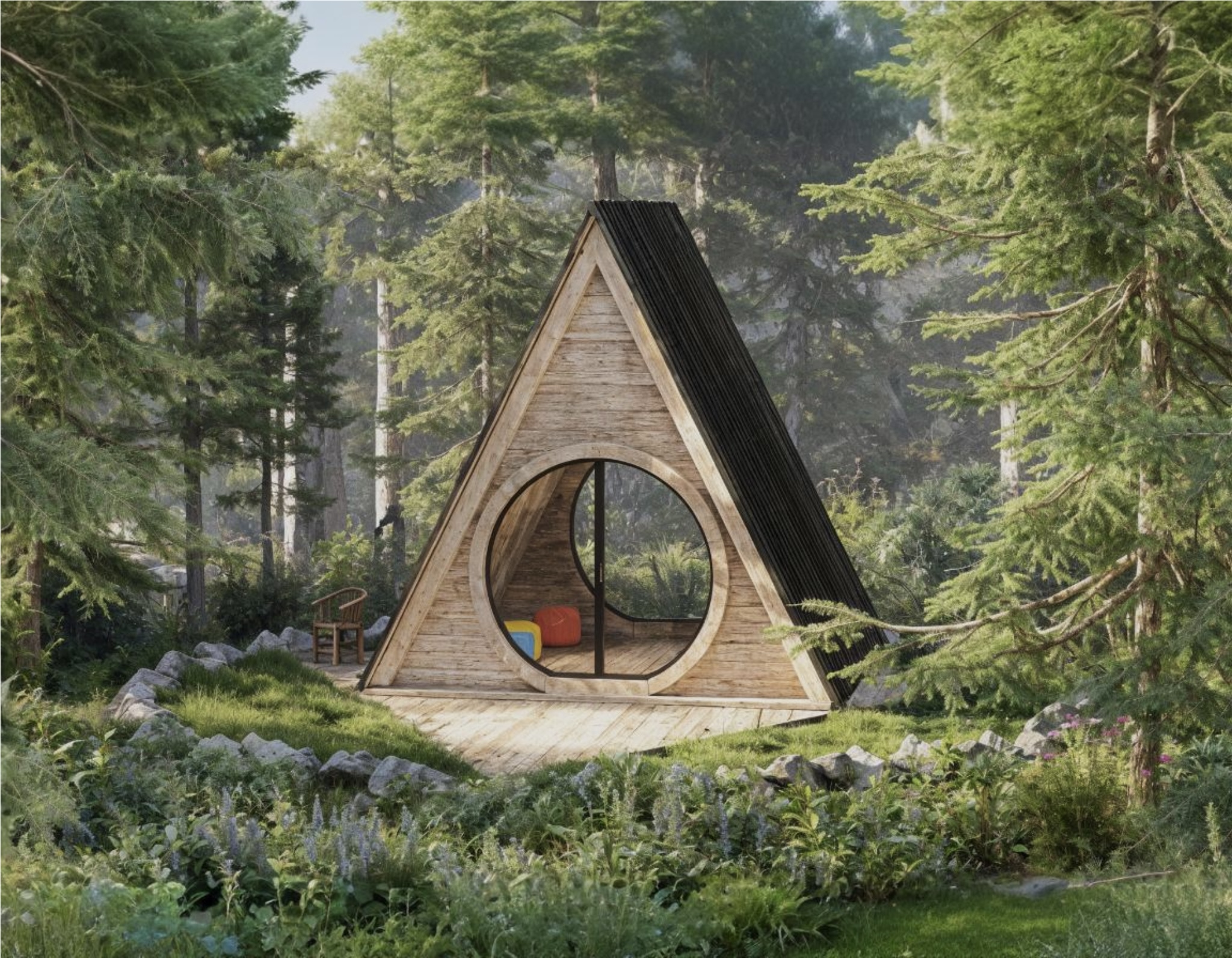
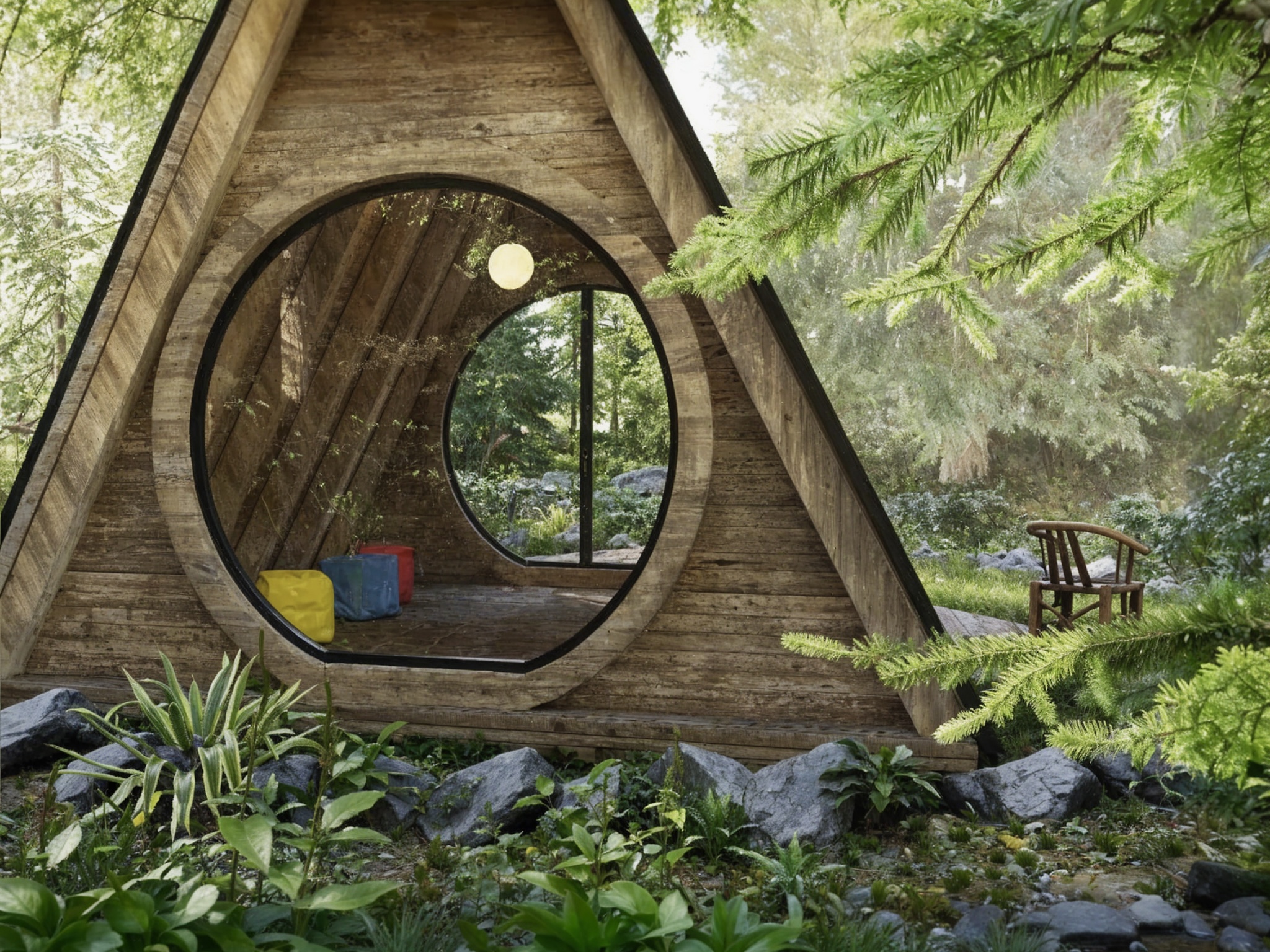
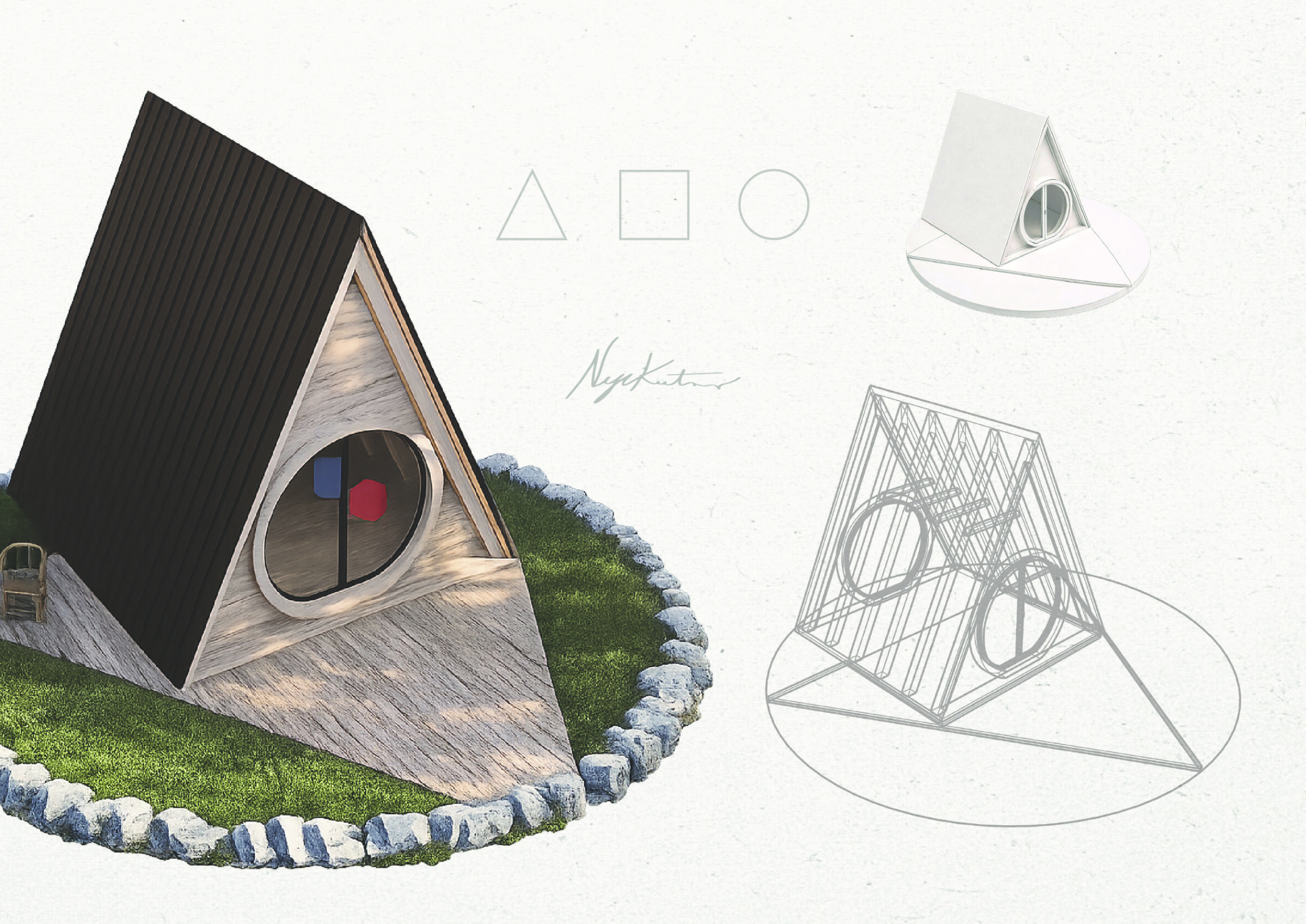
The Bauhaus Cabin project represents a contemporary interpretation of living in nature, combining principles of functionalism, spatial clarity, and geometric harmony. Inspired by the Bauhaus movement, where form consistently follows function, the architecture is conceived as a tool for creating a balanced and thoughtful living environment. The core of the concept is defined by three primary geometric forms - triangle, square, and circle - which appear along all geometric axes and are expressed in the plan, section, and overall volume of the structure.
The triangle reflects stability and a connection to mountainous landscapes, the square establishes order and spatial balance, while the circle introduces a sense of continuity and the cyclical nature of life. Their relationships generate a calm and coherent spatial composition.
Constructed primarily from sustainable wood, the cabin blends naturally with its surroundings while providing efficient insulation. Large glazed surfaces and circular openings frame panoramic views and invite abundant natural light, dissolving the boundary between interior and exterior. The project merges contemporary architectural language with sustainable principles, creating a serene and contemplative retreat that fosters rest, regeneration, and a deeper connection with nature.
Nejc Kutnar
Nejc Kutnar is a graduate of Interior Design at the Faculty of Design in Ljubljana, where he is currently pursuing Master’s degree in Design Management, with the aim of elevating the role of design in the business environment.
Primarily active in the field of interior design, he develops spatial solutions shaped by functionality, user experience, and a cohesive design approach. He has a particular interest in mobile architecture, where spatial constraints become a starting point for innovation and thoughtful use of space. In the future, he aims to extend this approach into nautical design, where movement becomes a key element in shaping space.
His work has been recognized with the SIT Furniture Design Award and the Rozman Award for best student of his generation. He has taken part in the international GIDE project and the European PUŠ project, developing his ideas within a broader design and research context.
My designs are never finished; they are simply rescued from my own obsession with perfection.
Contact
nejc.kutnar.nk@gmail.com
Powered by